Local school development through a partnership model: the Odysseum project in Cologne

Elina Johansson, a new municipal upper secondary school is currently being built in Cologne in an unusual location. How did the idea arise to use the former Odysseum interactive science centre for educational purposes?
The basis for this was the situation in Cologne: the city has a considerable and urgent need for more school places, whilst the availability of suitable building plots is very limited. This is a common problem in many major German cities. The Odysseum presented a unique opportunity in this regard, as the site was already zoned for school use and, in addition, had a very extensive existing building structure.
The objective was therefore to develop the existing building in a smart way rather than constructing a new one. Where a cultural and science centre once stood, a municipal upper secondary school is now taking shape, with capacity for around 1,000 pupils. The plan is for it to be completed in 2028. In this way, we are transforming a well-known and centrally located site into educational infrastructure and helping to reduce the shortage of school places in the Kalk district and in Cologne as a whole.
What significance does Cologne hold for Hemsö?
Cologne is a strategically very important education market for Hemsö. As Germany’s fourth-largest city, Cologne continues to grow, whilst there is a significant need for investment and refurbishment within the school sector. It is precisely here that our strength as a long-term specialist in public sector property comes into effect.
The Odysseum project is one of the largest and most complex school development projects Hemsö has undertaken in Germany. It is a fine example of the expansion of our education property segment and strengthens our presence in the North Rhine-Westphalia market. Cologne is a key location for us in further consolidating our position as a reliable partner to the public sector, and the Odysseum project is a flagship in our German portfolio.

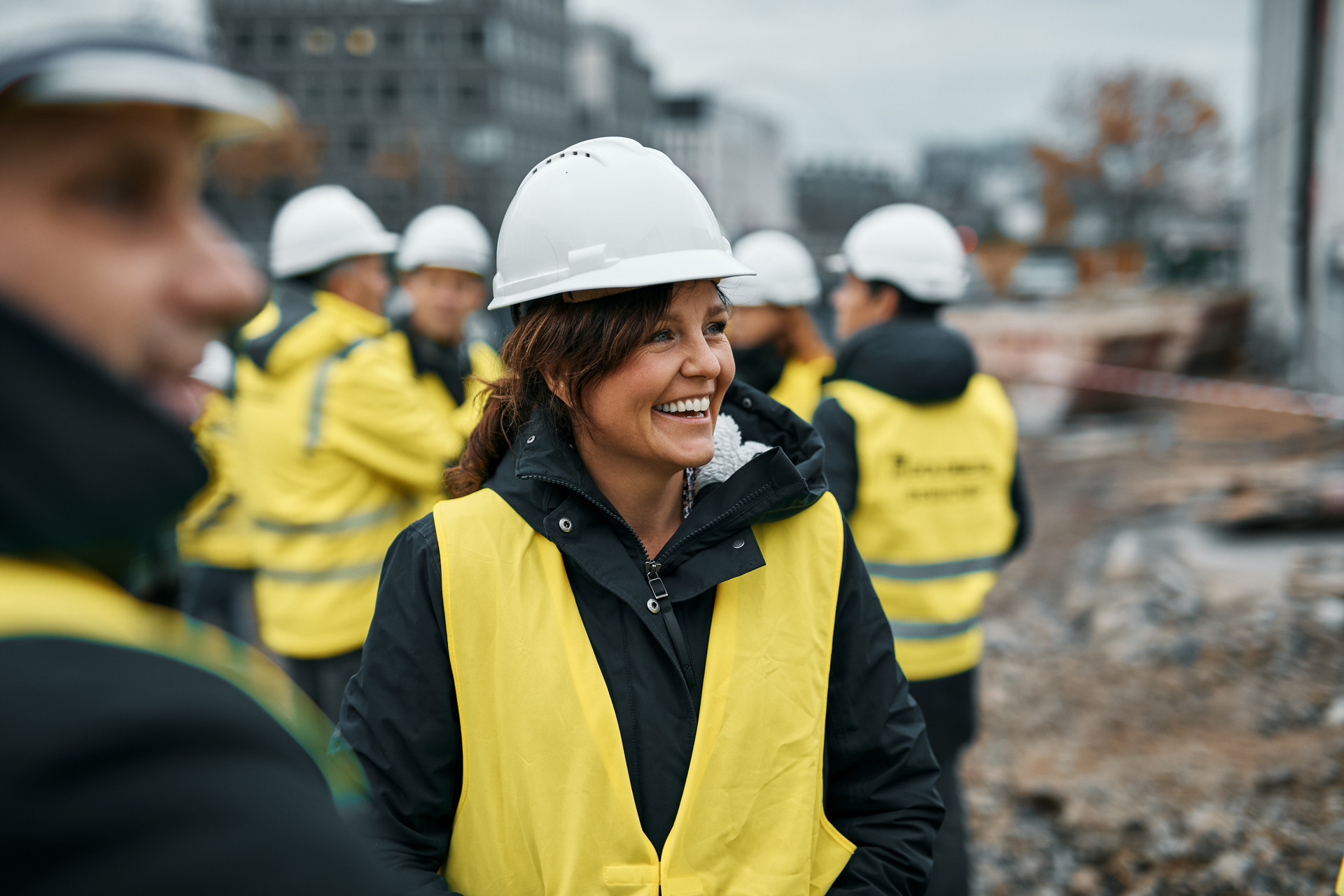
In your opinion, what makes this project a particularly good example of collaboration with a Municipality?
The project is characterised by a very clear allocation of responsibilities. The City of Cologne remains the school’s governing body and is responsible for educational matters and day-to-day operations, whilst we, together with our Austrian partner ARE, are responsible for the financing, development and management of the property from a life-cycle perspective. The 25-year lease creates a long-term partnership that provides budgetary predictability for the Municipality while bringing together professional operational and management expertise.
Here, therefore, a well-known existing site in a densely built-up neighbourhood can now be utilised. The building is based on passive house standards, with a solar panel installation on the roof, green spaces and a focus on cycling, with around 600 bicycle parking spaces.
Elina Johansson, Business development project manager at Hemsö in BerlinThe project will not only create new educational infrastructure, but also bring added value in terms of urban development and the climate.
How do you find the collaboration with the City of Cologne?
From a German perspective, this form of close collaboration is still relatively new, which means that both parties need to gain experience. In Cologne, we find the process to be very constructive.
Naturally, in a project of this kind, there is always a need for clarification, as public and private actors operate according to different processes and perspectives. However, the decisive factor has been that there has been a clear commitment on both sides to develop sustainable and effective solutions. This mutual understanding has been crucial to the project’s success.
How do you assess the city’s role in this process?
The City of Cologne has taken a bold step with this approach. Given the very significant need for new school places, we believe that combining different implementation models is a pragmatic and forward-looking approach.
It is particularly positive that the city has set out clear objectives, for example regarding timetables and quality standards, and that these are consistently monitored internally. This creates certainty in planning and reliability for all parties involved.
Hemsö has been working with local authorities in Sweden for many years. Why is this model more natural there than in Germany?
In Sweden, there is a long tradition of partnership between the public sector and private operators, particularly in the public property sector. Trust plays a central role in this context.
In addition, many professionals have worked in both municipalities and private companies during their careers. An understanding of both perspectives facilitates cooperation considerably. In Germany, such transitions are less common, which contributes to the systems being kept more separate.
What cultural and organisational differences do you notice?
In Sweden, there is greater trust in long-term partnerships, whereas formal regulation and legal safeguards play a greater role in Germany. Both approaches have their place.
The size of the administrative bodies also matters. In Sweden, decision-making processes often take place closer to the operational actors, whereas the structures in Germany are more complex. This requires more coordination, but at the same time ensures a high degree of transparency.
What objections do you most often encounter in Germany regarding private investors in school construction?
It often comes down to the issue of ownership. Schools are seen as a core responsibility of the public sector, which means there is a desire to own the buildings themselves. This stance is understandable.
We try to explain that responsibility for education can be separated from ownership of the property. The key point is that local authorities have long-term security, for example through buy-back rights or contractually agreed extension options. For us, as a long-term property owner, this is entirely in line with our own interests.
What significance does the Cologne project have beyond the local context?
For us, Cologne is an important showcase project. It demonstrates that complex school projects can be successfully implemented in a leasing model, even in large German cities, in close collaboration with the municipalities.
Such projects provide guidance and build trust. They can serve as models for other cities and municipalities facing similar challenges and seeking sustainable solutions.

What is your view on the future development of municipal cooperation in Germany?
There is a significant need for new educational infrastructure, and this need will continue to grow in the coming years. At the same time, many local authorities are facing financial difficulties.
Elina Johansson, Business development project manager at Hemsö in BerlinWe are convinced that partnership models can make a significant contribution in this regard.
Hemsö wishes to continue along this path in partnership with municipalities and demonstrate that long-term, reliable collaboration creates genuine added value – both for cities and municipalities and, not least, for the people who use these buildings.

Elina Johansson
Business development project manager at Hemsö
Read more

Annual Report
Read more about Hemsö in our annual and sustainability report. All reports are available for download here.
Financial reports