The World’s Largest Scale Model of the Solar System Expands: Saturn Arrives at Campus Polacksbacken
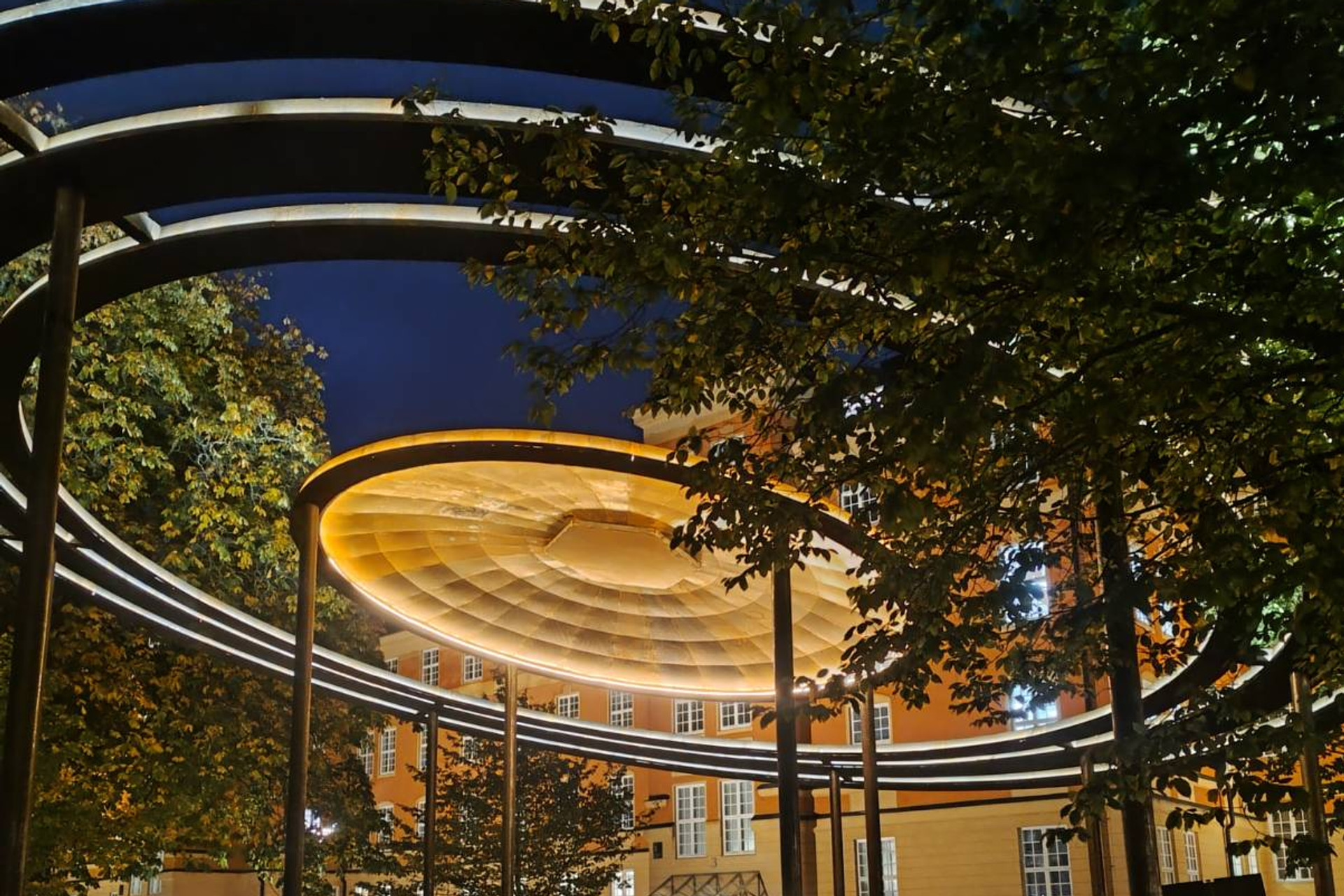
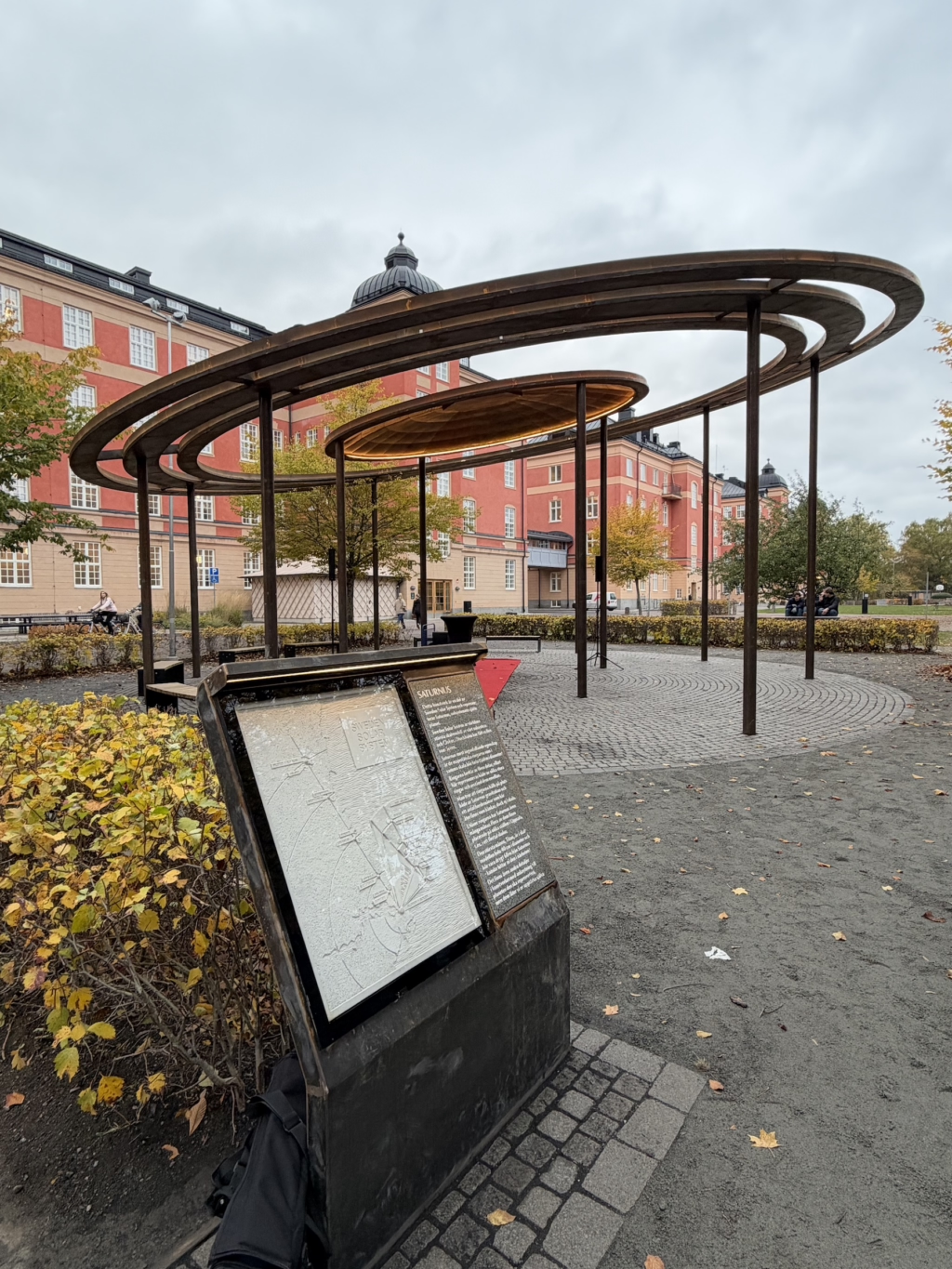
On 22 October 2026, a new sculptural artwork depicting the planet Saturn was unveiled at Campus Polacksbacken in Uppsala. The artwork is an official part of Sweden Solar System, the world’s largest scale model of the solar system in terms of geographical extent. The project is a unique collaboration between Hemsö, our tenant NTI Gymnasiet, and Sweden Solar System/the Swedish Astronomical Society.
Sweden Solar System (SSS) is a unique, geographically extensive scale model (1:20 million) in which Avicii Arena (the Globe) in Stockholm represents the Sun. The planets are positioned at accurately scaled distances and sizes across Sweden, stretching as far as Kiruna in the north, Karlshamn in the south and Gothenburg in the west. On 22 October 2026, it was time for Saturn, the second-largest planet in our solar system, to take its rightful place in Uppsala.
Anna Lindin, Regional manager at HemsöWe are proud that Saturn now has a home at Campus Polacksbacken. The artwork strengthens the identity of the campus and brings together the different organisations based in the area. It is particularly rewarding that the initiative came from our tenants at NTI Gymnasiet and that the campus is now part of the wider Sweden Solar System project.
“Through this collaboration, we bring together education, research and urban development in a very tangible way. I hope Saturn will become a meeting place at NTI Gymnasiet here at Campus Polacksbacken, inspiring curiosity about science, space and art among both students and the general public,” said Anna Wiklund, Principal of NTI Gymnasiet in Uppsala, at the inauguration.
Sweden Solar System
Sweden Solar System is the world’s largest scale model of our solar system, created by astronomer Gösta Gahm and physicist Nils Brenning in the 20th century. The idea came to Brenning as he cycled past the Globe Arena in Stockholm and began wondering how large the planets would be if the Globe represented the Sun. Over the years, stations have been added across Sweden, and with the new installation of Saturn, the model now comprises 27 stations.
“We are delighted that Sweden Solar System is finally complete with the installation of the Saturn model. This means that all the planets in our solar system are now represented by artistic installations, alongside numerous dwarf planets, asteroids and comets, in a model that spans the entire country,” said Tanja Kramer Nymark of the Swedish Astronomical Society.
Strong Interest in the New Saturn Installation
Hemsö, NTI Gymnasiet and the Swedish Astronomical Society were not the only organisations involved in bringing Saturn to Uppsala. Jan-Erik Wahlund, Professor Emeritus at the Swedish Institute of Space Physics (IRF), also contributed to the project. At the inauguration ceremony, he spoke about Saturn as a planet, the historic Cassini–Huygens mission, and the important role of Sweden and Uppsala in space research.
Jan-Erik previously served as principal investigator for a Swedish-developed scientific instrument aboard the Cassini spacecraft, which explored Saturn. His research has contributed to our understanding of how the planet’s atmosphere interacts with its rings. Jan-Erik Wahlund is currently an Associate Professor at IRF’s Uppsala division, which, fittingly, is also located at Campus Polacksbacken.
About the Saturn Art Work
- Size: Approximately 6 metres in diameter, 13 metres including the rings.
- Material: Corten steel.
- Construction: Saturn was installed during spring and summer 2026 and officially unveiled on 22 October 2026.
- Location: Campus Polacksbacken, Uppsala, 73 km from the Globe Arena in Stockholm.
- More information: Read more about Sweden Solar System and its other installations here.
For more information